
Hair · 29 September 2026 · 5 min read
Thinning hair: Regenera, PRP or scalp injections?
Thinning hair is one of the most common reasons patients come to us, and one of the most frequently mistreated. Before choosing between Regenera, PRP or scalp injections, it helps to know why the hair is thinning — because that decides what can realistically help.
Thinning hair is one of the most common reasons patients come to us, and one of the most frequently mistreated. Before choosing between Regenera, PRP or scalp injections, it helps to know why the hair is thinning — because that decides what can realistically help.
First, find the cause
Hair loss has many causes, and they often overlap. The most common are androgenetic thinning, which is genetic and hormonal and affects both men and women; telogen effluvium, a diffuse shedding that can follow illness, stress, childbirth or rapid weight loss; and thinning linked to iron deficiency, thyroid conditions or other medical factors. Less often, inflammatory conditions of the scalp are involved.
Each of these needs a different approach. Injecting the scalp will not correct an iron deficiency, and treating shedding as if it were genetic thinning can waste months.
Why we begin with trichoscopy
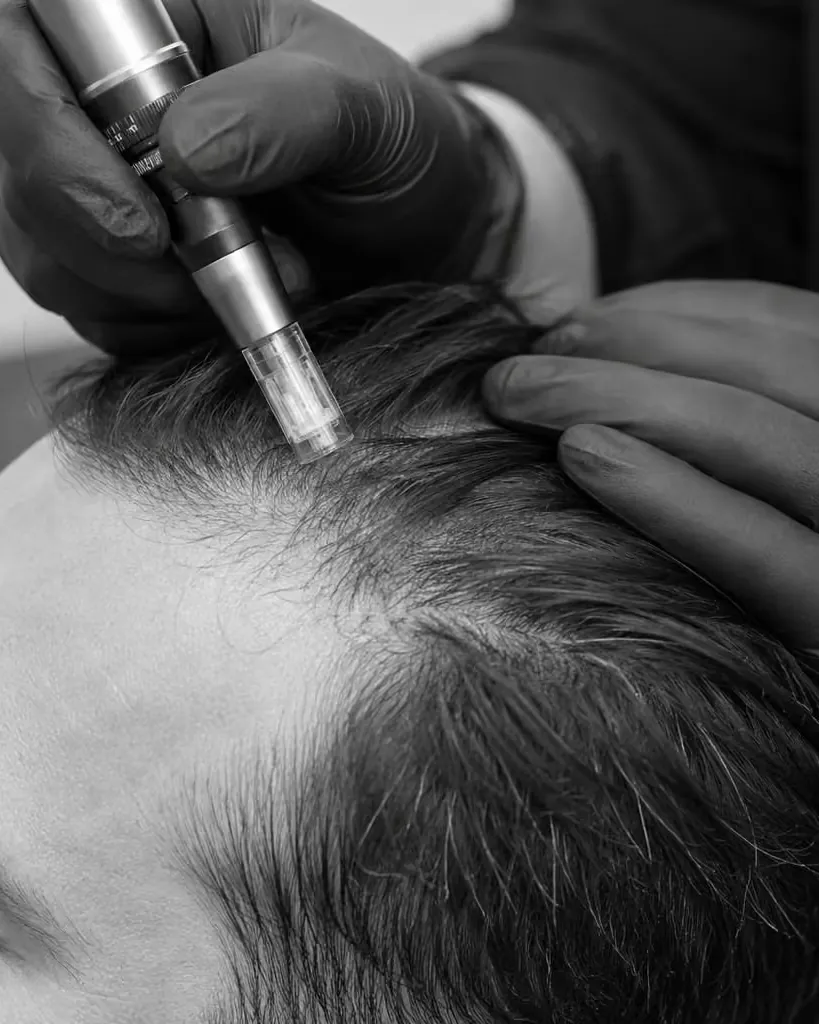
Every hair plan at The Fame starts with a trichology consultation that includes trichoscopy — a magnified examination of the scalp and follicles. It shows the type and stage of hair loss, the proportion of thin and miniaturised hairs, and the condition of the scalp itself. It also tells us whether the follicles in the thinning area are still active, which is the deciding factor for every treatment below.
Where needed, the doctor will also recommend blood tests or a referral for medical treatment. In-clinic procedures work best as part of that wider plan, not instead of it.
Regenera Activa: micrografts from your own scalp
Regenera Activa is a medical device developed in Spain that uses the patient's own tissue. The doctor takes a few tiny samples of skin, around 2.5 mm across, from the back of the head, where hair is usually strongest. The device processes them into a suspension of micrografts, which is then injected into the thinning areas of the scalp.
The aim is to support and reactivate weakened follicles. The procedure takes about an hour, is usually done as a single session, and allows a return to normal routine the same day. It is most suitable for early to moderate androgenetic thinning in men and women, where follicles are weakened but still present.
Arthrex PRP: a course built on your own platelets
For PRP we take a small blood sample and process it in the closed Arthrex double-syringe system, which separates platelet-rich plasma without contact with air or additives. The concentrate, rich in growth factors, is injected into the scalp after numbing cream.
PRP is a course rather than a single treatment: usually three to four sessions four weeks apart, followed by maintenance every four to six months. It thickens existing hair and can reactivate weakened follicles. It does not restore areas that have been bald for years. Because the hair cycle is slow, density is judged at around three months, not in the first weeks.
PRP works best early — when follicles are thinning, not gone. Injections alone rarely solve a hormonal cause, which is why trichoscopy and, where indicated, medical treatment come first.
Scalp mesotherapy: nourishing the follicle
Scalp injections with ready-made formulas deliver active ingredients directly to the follicle level. We use Aesthetic Dermal XL Hair and Inno Derma TDS Hair Loss Control, selected according to the scalp's condition and the type of loss.
Mesotherapy is useful for diffuse shedding, for supporting hair quality, and for patients who prefer not to have a blood draw or tissue sample. It is also often alternated with PRP within a longer programme. On its own it is a supportive treatment rather than a solution for advanced genetic thinning.
How to choose
- Regenera Activa: early to moderate androgenetic thinning, for patients who prefer a single procedure.
- Arthrex PRP: thinning with active follicles, for patients comfortable with a course and maintenance sessions.
- Scalp mesotherapy: diffuse shedding, scalp support, or as part of a combined plan.
- Combination: common in practice — for example, Regenera or PRP alongside mesotherapy and medical treatment.
None of these is suitable during pregnancy and breastfeeding, with active infection or inflammation on the scalp, or with active oncological disease. PRP is also not used with blood disorders or anticoagulant therapy. The doctor will review your medical history before recommending any procedure.
What to expect, honestly
Hair responds slowly. The first sign is usually reduced shedding, followed by thicker hair and better density over several months. Results vary between people and depend on the cause, the stage and how consistently the plan is followed, including home care and any prescribed treatment.
If you have noticed a wider parting, a thinner ponytail or more hair in the brush, the earlier you are assessed the more options remain open. A trichology consultation with trichoscopy is the right place to start.
This article is general information, not a medical recommendation. A doctor decides on treatment after an in-person consultation.
Read moreabout them.

More articles.


Start witha consultation.
The aesthetic consultation is free. We assess the skin, tell you honestly what will help — and what can wait.